
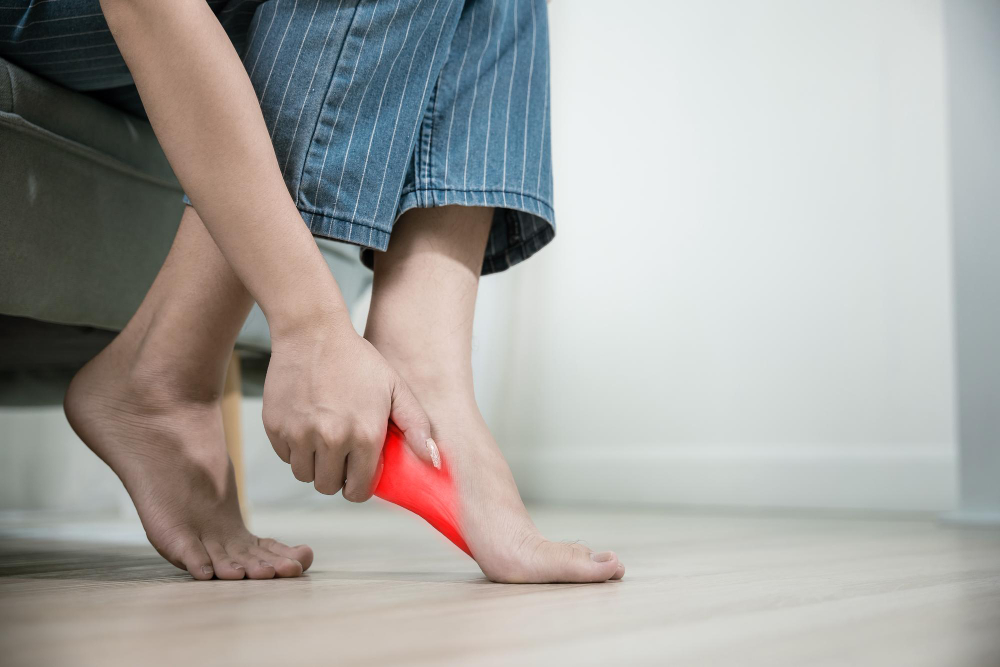
What Is Plantar Fasciitis?
Plantar fasciitis is a common cause of heel pain. It happens when the thick band of tissue on the bottom of your foot, called the plantar fascia, becomes irritated or inflamed. This tissue connects your heel bone to your toes. For many people, plantar fasciitis leads to sharp pain in the heel or arch, especially when taking the first steps in the morning. Because this pain can be severe, finding heel pain relief is important for daily comfort.
Why Does Plantar Fasciitis Cause Sharp Morning Foot Pain?
After a night of rest, your foot muscles and the plantar fascia tighten up. As a result, when you get out of bed and put weight on your feet, the tight tissue stretches suddenly. This quick stretch can cause sharp, stabbing pain in your heel or arch. Over time, the pain may ease as you walk, but it often returns after sitting for a while. Therefore, morning foot pain is a key sign of plantar fasciitis.
Benefits of Targeted Heel and Arch Stretches
Stretching your heel and arch can help reduce pain. In fact, regular stretches make the plantar fascia more flexible. This means less pulling and less pain when you walk. Additionally, stretching can help prevent future flare-ups. For those seeking morning foot pain solutions, these stretches are simple and safe. They can be done at home and do not require special equipment.
Step-by-Step Stretches for Plantar Fasciitis Relief
Try these easy stretches each morning or before activity. Always move gently and stop if you feel sharp pain.
Tips for Preventing Morning Foot Pain
Besides stretching, there are other ways to prevent sharp morning foot pain. For example, you can:
In colder climates, keep your feet warm to prevent stiffness. In hot or humid areas, choose breathable shoes to avoid sweat and irritation.
When to See a Physiotherapist
If your heel pain does not improve after a few weeks of home care, it is time to seek help. Also, if the pain gets worse or you have trouble walking, a physiotherapist can guide you. They can teach you more advanced stretches and exercises. In addition, they may suggest other treatments, such as taping or special shoe inserts. According to the CDC and peer-reviewed studies, early treatment leads to better outcomes and less long-term pain.
For the best results, consult a physiotherapist at Movement school physio clinics for personalized guidance on plantar fasciitis relief.